We knew that meant we would need to find another insurance option, but what we didn't anticipate was learning that there would no longer be ACA insurance options available to us that included Children's Mercy, where our daughter Katie receives care.
I am deeply passionate about advocating with the disability community, and I cannot wait to spend the next few months serving and learning alongside this incredible community.
Katie's Story: When Having Health Insurance Isn't Enough
We knew that meant we would need to find another insurance option, but what we didn't anticipate was learning that there would no longer be ACA insurance options available to us that included Children's Mercy, where our daughter Katie receives care.
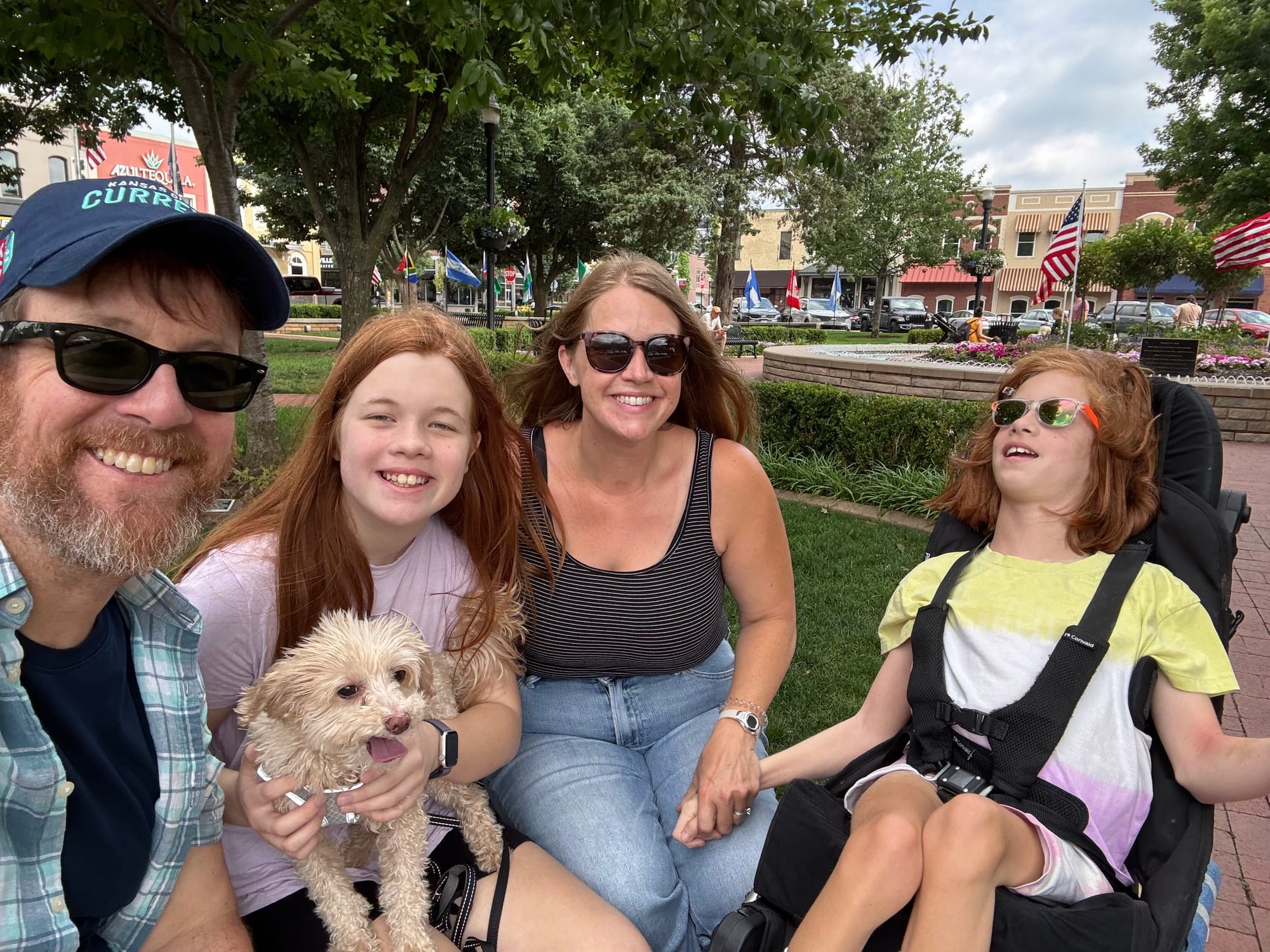
Hi! We're the Woods, a family of four living in Kansas. This summer, our family received a letter from our insurance provider informing us that it would no longer participate in the Affordable Care Act (ACA) marketplace.
We knew that meant we would need to find another insurance option, but what we didn't anticipate was learning that there would no longer be ACA insurance options available to us that included Children's Mercy, where our daughter Katie receives care.
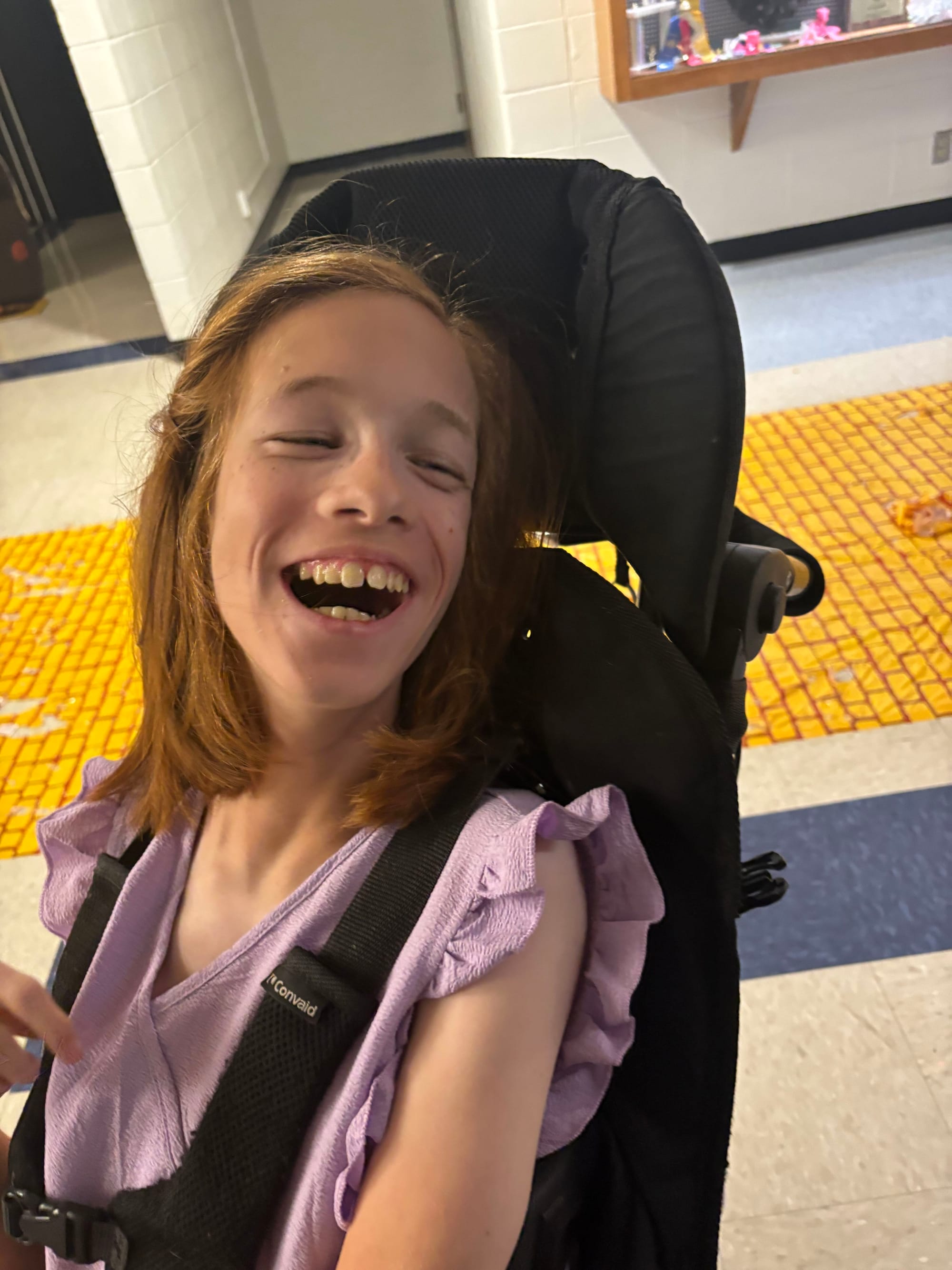
Katie is not just a medical history or an insurance claim; she's a 14-year-old girl with a whole lot of personality.
Katie is kind, joyful, and loves being around people. She loves going to parks, restaurants, and malls. She's a member of her school's Kindness Club and bowling team, and attends yoga weekly with friends. She loves knowing everyone's favorite things and giving gifts. She has a wonderful sense of humor, is a good friend, and is genuinely a joy to be around.
Katie also has spastic quadriplegic cerebral palsy, cortical visual impairment (CVI), and a seizure disorder. She uses a wheelchair and needs assistance with nearly every aspect of daily life. At school, Katie has a one-on-one paraprofessional throughout the day and receives special education services and therapies, including speech, physical, occupational, and vision therapy, as well as orientation and mobility services and assistive technology.
After school, she's often headed to another therapy appointment, either at home or an outpatient clinic. She needs 24-hour care. It is both our privilege and our reality.
Our family has had to make a lot of decisions around work and insurance to make sure Katie gets the care she needs. Colin and I were both working full-time when Katie and her twin sister were born at 29 weeks following a rare pregnancy complication called twin-to-twin transfusion syndrome. Both girls spent three months in the NICU.
For families like ours, health insurance isn't simply about having a card in our wallets. It's about knowing that our children can continue seeing the specialists who know them, accessing the therapies they need, and receiving medical care as their needs change. Katie is 14 now, and her body is changing. She was diagnosed with a new seizure disorder last year, and she's facing major orthopedic surgeries. She will always need health services and caregivers to support her.
The ACA gave us a way to maintain coverage while working outside traditional employer-sponsored insurance. But now we're facing the possibility that the very coverage we worked so hard to secure won't give us access to the hospital where Katie receives care.
Katie needs major hip surgery. Over the past year, she's been experiencing increasing pain and has actively lost mobility. The earliest she can have the surgery is May 2027, and she'll need major back surgery after that. Without an insurance plan that includes Children's Mercy, we're facing the possibility of paying hundreds of thousands of dollars out of pocket for the care she needs. We don't even know what that final number will look like.
Despite Katie's significant disabilities and extensive support needs, our family doesn't qualify for Medicaid waiver services. We fall into what is often called the "missing middle": families whose children have substantial medical and disability-related needs but who don't qualify for the programs designed to help provide additional support.
There are services we'd love to see more widely available, including respite options for families and specialized teachers and therapists who understand cortical visual impairment. Finding the right support can be difficult, and we would love to see more specialized services available both at home and in outpatient settings.
Families with medically complex children already spend so much of their time coordinating care and making sure their children have what they need. When you add insurance complications, claims, medical bills, and the constant search for services, it becomes a full-time job on top of the full-time job of caregiving.
Now we're facing the possibility that money we've saved for Katie's future could be spent simply trying to access the surgery she needs. That money was meant for her medications, therapies, and caregiving services. We shouldn't have to sacrifice those things to pay for medical care that she cannot prevent needing.
I wish there were more knowledge and training about the disability community and the supports medically complex children and their families need. I wish the people making decisions understood what caregiving actually looks like and how much families are already doing.
Everyone should have access to health care. Health care should not be for profit. Our kids are paying for it physically and financially.
I am deeply passionate about advocating with the disability community, and I cannot wait to spend the next few months serving and learning alongside this incredible community.
Advocacy, within my capacity, is so important to me. Telling my family’s story helps people understand the importance of an equitable and just care system.