Violette's Story: A Fiercely Independent Peanut Butter and Jelly Fan
Violette is an opinionated girl who marches to the beat of her own drum. Thanks to Medicaid, she does that at home, not in an institution.

Violette is an opinionated girl who marches to the beat of her own drum. Thanks to Medicaid, she does that at home, not in an institution.

By Courtnay Schadtle
My name is Courtnay Schadtle, and I live in Lewiston, Maine, with my daughter, Violette, and our two dogs, Jamie and Ash. I was born and raised in Maine and have lived in a few different places throughout the state before settling here. I currently work remotely as a virtual assistant for a doula agency based in Chicago. A big part of my role is providing overnight on-call support, helping families and doulas navigate unexpected situations, and coordinating backup care when needed. Being able to work from home and have that flexibility has been incredibly important for our family.
Violette is five and a half years old, and trust me, that half is VERY important! She is spunky, opinionated, fiercely independent, and knows exactly what she wants. She loves Elmo, watching Mooseclumps on YouTube, and absolutely everything about Christmas. If it involves red, green, Christmas lights, or Christmas trees, she's all about it. She's also a big peanut butter and jelly fan, but don't even think about trying to sneak in some questionable jelly. She will know!
Violette is definitely a morning person. By the afternoon and evening, she's ready to do things her own way, on her own time. She marches to the beat of her own drum, and while I love that about her, there are definitely moments when I look at her and think, "Oh no, that's me. This is exactly what my mom had to deal with!"
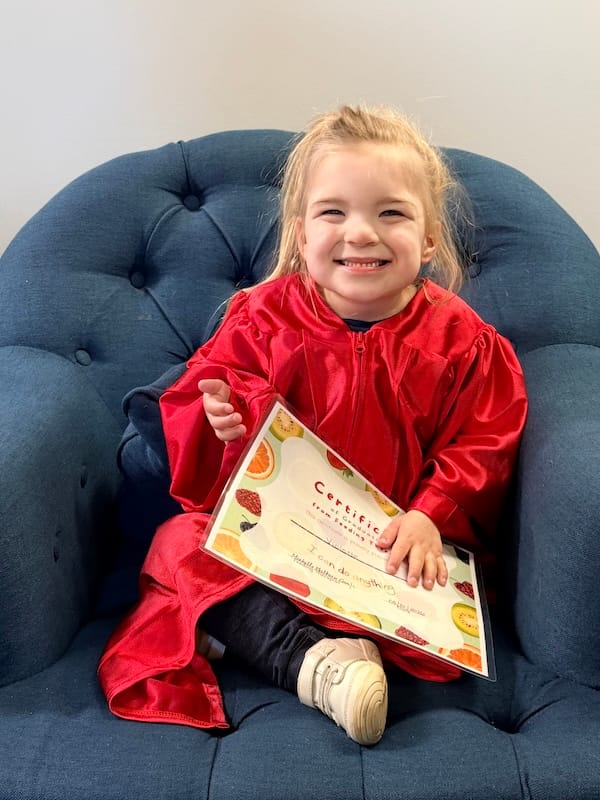
My pregnancy with Violette was fairly uneventful until I was admitted to the hospital at 31 weeks due to preeclampsia. While I was there, her heart rate kept dropping, and nobody could really explain why. Eventually, we made the decision that it was time for her to be born. Violette arrived via C-section at just 32 weeks.
Shortly after she was born, we learned that she had suffered a stroke. She spent a little over two months in the NICU. Thankfully, because her brain was still developing, it was able to adapt and reroute some of the damage caused by the stroke. We knew early on that she might need additional support as she grew, so we jumped right into early intervention services.
When Violette was around a year old, I started noticing some behaviors that looked like seizures. We had an EEG done, which confirmed that she was having seizures, but surprisingly, they weren't related to her stroke. That led us down the road of genetic testing, where we discovered that Violette has an extremely rare genetic disorder called HNRNPU deletion.
At the time, we learned that she was one of approximately 100 people worldwide with this diagnosis. The disorder can cause seizures, developmental delays, and several other challenges. Suddenly, so many of the things we had been seeing started to make sense.
From that point on, my focus was making sure Violette had access to every service, resource, and opportunity that could help her thrive.
One of Violette's diagnoses is cortical visual impairment, or CVI. Essentially, her eyes work, but her brain has difficulty processing what she's seeing. The way I often explain it is that it's almost like looking through a kaleidoscope. Some days are better than others, and on the harder days, her vision can be incredibly overwhelming.
She works with vision and orientation specialists who help her learn how to navigate her surroundings safely. On days when her vision is particularly challenging, she might prefer being in a dark room because it's less stimulating. Sometimes she'll tilt her head or lie upside down because she's trying to make sense of what she's seeing and how her body is positioned.
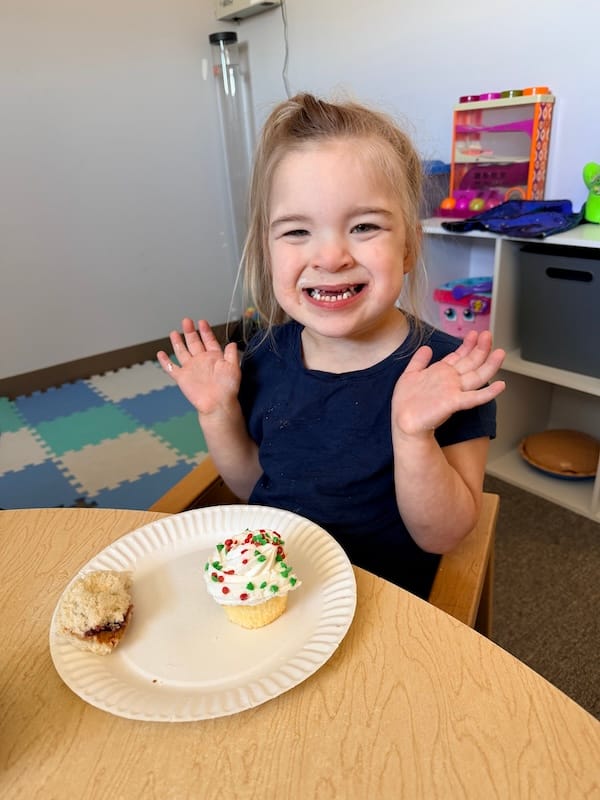
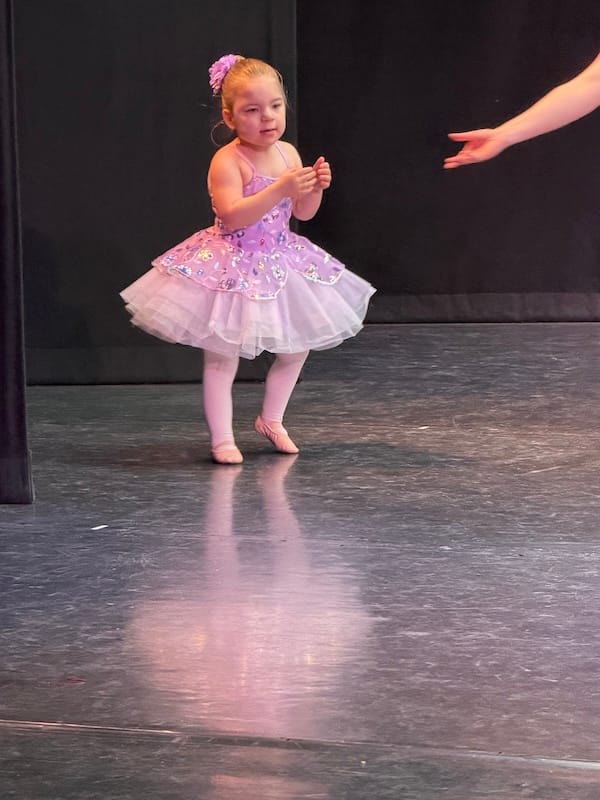
As she's growing and learning to navigate the world around her, we're also working on building her independence with walking. Something as simple as having a disability parking placard has made a huge difference for us. Being able to park closer to places in our community gives Violette the opportunity to practice walking into buildings independently without becoming completely exhausted before we even get inside. Those might seem like small things to someone else, but for us, they're huge.
Violette also participates in physical, occupational, and speech therapy several days a week. I cannot say enough good things about the providers we have in her corner. I've followed therapists when they've moved practices, adjusted our schedules, and added extra driving time because finding people who genuinely understand your child and care about their progress is worth every bit of it.
I know how fortunate we are to have the team we do. I often refer to them as Violette's dream team, and one of my biggest goals is to help other families build their own dream team, too. Of course, getting to this point hasn't been easy.
Violette has private health insurance through her father's employment with the City of Auburn, along with MaineCare through the Katie Beckett program. Katie Beckett allows children with significant medical or developmental needs to qualify for MaineCare based on their own eligibility, rather than solely on their family's income.
Getting her enrolled was a process, to say the least. There was paperwork, phone calls, more paperwork, and what felt like endless hours on hold. I remember working for a boss who became very familiar with the sound of elevator music because I was constantly calling to follow up on something. You really have to stay on top of everything, and even then, it can feel like you're getting nowhere.
And that's where a lot of my passion for advocacy started.
I was navigating all these systems because my daughter needed support, but I couldn't stop thinking about the families who didn't have the time, flexibility, knowledge, or confidence to keep pushing. What happens when a parent can't spend hours on the phone? What happens when they don't know what questions to ask, what services exist, or that they even have the right to challenge a decision?
I see it all the time in parenting groups. A parent will post because they're overwhelmed, frustrated, or completely lost trying to figure out MaineCare, Katie Beckett, or another service. And my first instinct is always to reach out and say, "Hey, let's chat. I'll help you figure it out."
Because I've been there. I know how overwhelming it can be.
Some of these systems feel like they're still operating in the Stone Age. You're mailing paperwork and hoping it actually makes it to the right person. You're waiting months for answers, only to turn around and start the redetermination process all over again. You're having to prove, repeatedly, that your child still qualifies for services they depend on.
There has to be a better way. Families should be able to easily check the status of an application, understand what documents are needed, complete renewals, and get clear answers without spending hours tracking someone down. These aren't unreasonable expectations. They're basic things that would make an enormous difference for families who already have so much on their plates.
Unfortunately, MaineCare hasn't been the only system we've struggled with.
Our experience with Child Development Services, or CDS, has been another challenge entirely. We had significant issues with case management early on and finally found someone who was wonderful. Then the state started changing how services were managed, and suddenly we were right back to struggling to get answers or even get someone to return a phone call.
As children get older, services begin transitioning into the school system. For our family, we've made the decision to homeschool Violette because we believe that's what works best for her and her individual needs. In the school letting she wouldn’t be getting the level of therapies she is now in the medical model set up.
Through all of these experiences, I've learned just how important it is for parents to understand their rights, know what resources are available, and feel confident advocating for their children. But I've also learned that not everyone has the capacity to do that on their own, and they shouldn't have to. That's really what has pushed me to take my advocacy beyond just my own family. I want to use what I've learned, the challenges we've faced, and the connections I've made to help other families navigate these systems without feeling so alone. I want to help parents understand their options, ask questions, find resources, and build a support system that truly works for their child. I also want to be part of creating change on a bigger level. It's one thing to help a family work through a complicated process, but it's another to step back and ask why that process has to be so complicated in the first place.
Families deserve better, and I want to be part of making that happen. If sharing our story helps even one parent feel a little less overwhelmed, a little more confident, or gives them the courage to speak up for their child, then that's worth it to me. I want someone to hear my story and think, "Okay, she's been through this too. Maybe I can do this." And for the parent who doesn't feel comfortable speaking up, who is exhausted, overwhelmed, or just doesn't know where to begin, I want them to know there are people willing to stand beside them and help amplify their voice.
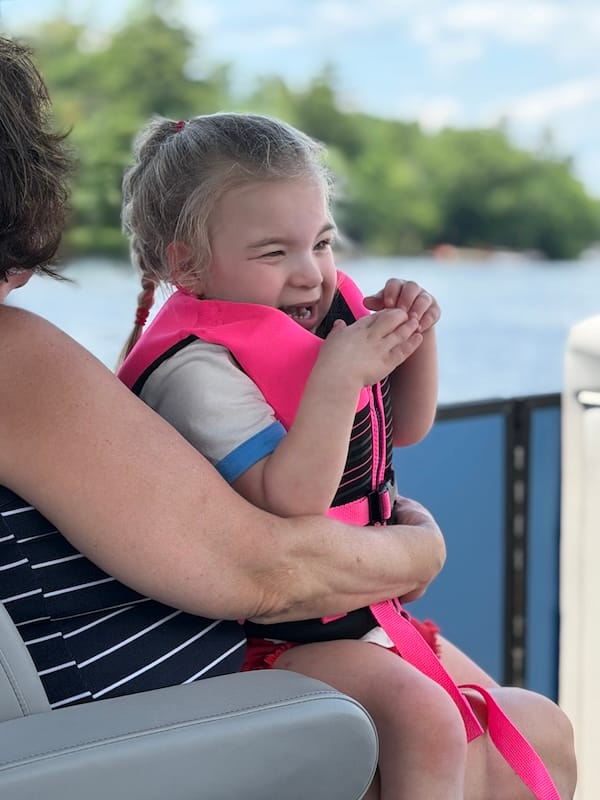
One of the biggest things this journey has taught me is that raising a child with disabilities really does take a village. But that village doesn't have to be made up of just family. It can be friends, providers, other parents, advocates, or even complete strangers who share the same goal.
At the end of the day, we all want the same thing: for our children to have the opportunity to grow, thrive, and live the fullest lives possible.
And if I can help make that journey even a little bit easier for another family, that's exactly what I want to do.

Advocacy, within my capacity, is so important to me. Telling my family’s story helps people understand the importance of an equitable and just care system.

JW is a kind, resilient, caring child who counts on Medicaid for his lifesaving seizure medication.

Little Lobbyists' intern Grace Heuer writes about taking the fight to Capitol Hill...and rethinking what advocacy can look like.

Lazaro lives in his Maryland community thanks to the state's Community Pathways Waiver.