Ella, Riley, and Victoria's Stories: Life Can Change in the Blink of an Eye
Public service and advocacy run deep in the LaVigne family.

Advocacy, within my capacity, is so important to me. Telling my family’s story helps people understand the importance of an equitable and just care system.

My name is Trisha Courtney. I live in Kansas with my husband Keven and our four amazing children, Serenity, Drake, Giovani, and our youngest, Ravyn. Over the years, we have also welcomed countless foster children into our home, providing a safe space for medically complex and disabled children to land. At one point we had seven kiddos in the house!
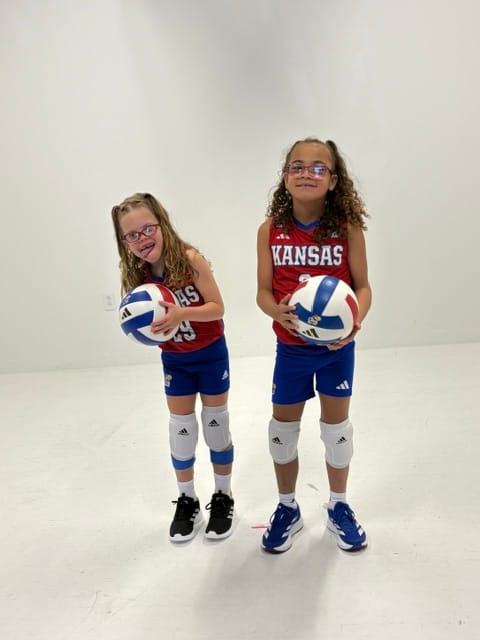
My oldest three are all very close in age, between nine and nine-and-a-half, while Ravyn is seven-and-a-half. Serenity and Ravyn both play volleyball through Team IMPACT, while Drake plays baseball. Giovani is more of a car guy: I just found some very cute Sketchers with little garages in the heels for him. Serenity loves the color green and her favorite kitty, who is absolutely her best friend, while Ravyn is very committed to purple. The kids bring so much vibrancy and life to our house, even though it can get pretty noisy sometimes!
All of our children are medically complex and/or special needs.
Serenity was born at 25 weeks, and spent quite some time in the NICU because she was born with two grade four brain bleeds. Because of her prematurity, and the fact that she has cerebral palsy and ADHD, she’s quite medically complex and requires 24/7 eyes-on care.
We really do mean 24/7: Like a lot of kids with brain injuries, her sleep tends to be very fragmented, so Keven and I spend a lot of time getting up over the course of the night to be with her. Over the course of her life, she’s had 26 surgeries. She relies on a GJ tube for nutrition; has a colostomy and a MACE button; uses CPAP at night; and often needs to be on home oxygen. She requires a lot of medical equipment, including a suction machine and cough assist.
She’s also dealing with a lot of medical trauma. Serenity is very uncomfortable with health care providers after years of hospitalizations and procedures. Because of this, Keven and I have to be her primary caregivers at all times: We can’t have nurses care for her at home, and even when she’s in the hospital, we provide a lot of her hands-on care. For example, nurses will sign off on medications, and then one of us administers them. I also have to be on-call for anything that happens at school—I am rarely more than ten minutes away while the kids are at school. Caring for her is an honor and a joy, and it’s also my full-time job.
Through the Kansas IDD waiver, Serenity receives 260 hours of self-directed care a month. This means that she gets to hire, train, and fire her support staff—so, yes, she is our boss. And she sure lets us know it! This allows us to be compensated for the complex and extremely skilled care that we provide as we effectively run an ICU in our home. The state recently cut our hours without explanation, even after our caseworker argued for more, which is very worrying for us. These kinds of services are always first in line for cuts, even though they are lifesaving and keep our kids living in their communities.
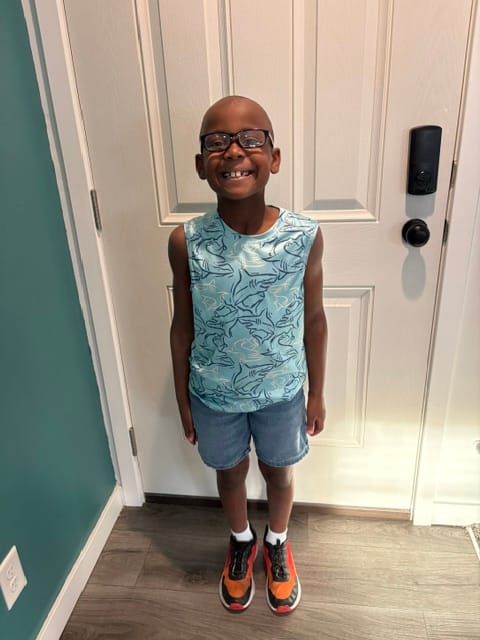
Our three other children have been on the IDD waiver waitlist for around three years—given that the waitlist is eight to ten years long, they’ll all be teenagers before they qualify.
Drake was born at 23 weeks and weighed 1.6 ounces at birth. He had grade three and four brain bleeds, and required shunts and other surgeries—over the course of 2020 and 2021, he had seven major shunt malfunctions requiring urgent care. Like his sister, Drake has cerebral palsy and he also has epilepsy, which is managed with medication. Drake is nonspeaking and uses an AAC device to communicate.
Ravyn has congenital hydrocephalus, which requires a shunt. She also has cerebral palsy and ADHD. She uses a white cane to assist with navigation because she has a cortical visual impairment: Her vision is fine, but her eyes have trouble talking to her brain, so she can’t always process what she’s seeing.
Giovani has autism, ADHD, and some mental health diagnoses. He can struggle with self-regulation and behavior in addition to his learning disabilities.
Caring for all of my children involves 64 medications a day, in addition to managing a variety of medical equipment, as-needed medications, and emergencies.
All of my children attend school as active members of their community, although Serenity only attends for four hours a day. They spend a mix of time in mainstream classrooms and life skills settings. Advocating for medically complex and disabled children in the school system involves a lot of pushing to make sure they get the services and supports they need during the IEP process. I’m also acutely aware that school districts cut disability services first.
Caring for all of my children involves 64 medications a day, in addition to managing a variety of medical equipment, as-needed medications, and emergencies. We are fortunate to have Medicaid coverage for all four until they turn 18, because we adopted them out of the foster system. Serenity’s medical complexities are significant enough that she will probably transition to Social Security and Medicare/Medicaid for her health care costs when she turns 18, but applying for these benefits for my younger children could be challenging. I am definitely worried about this: If the government cuts these programs, keeps reducing hours, or limits eligibility, it would make it very hard for us to keep our kids at home. Their medical supplies alone cost more than $20,000 per month.
We do think they will be with us for the rest of their lives. Our children are the light of our life and we wouldn’t change a thing. They are amazing humans who bring so much life into the lives of everybody they encounter. Just because they’re medically complex doesn’t mean they don’t deserve the things other children deserve. It doesn’t mean they are any less loved.
Advocacy, within my capacity, is so important to me. Telling my family’s story helps people understand the importance of an equitable and just care system.

Public service and advocacy run deep in the LaVigne family.

Violette is an opinionated girl who marches to the beat of her own drum. Thanks to Medicaid, she does that at home, not in an institution.

JW is a kind, resilient, caring child who counts on Medicaid for his lifesaving seizure medication.

Little Lobbyists' intern Grace Heuer writes about taking the fight to Capitol Hill...and rethinking what advocacy can look like.