Trisha's Story: In It for Life With Serenity, Drake, Giovani, and Ravyn
Advocacy, within my capacity, is so important to me. Telling my family’s story helps people understand the importance of an equitable and just care system.

Madison loves Moana, adores school, and was a fighter from day one.

By Dianne Westfall
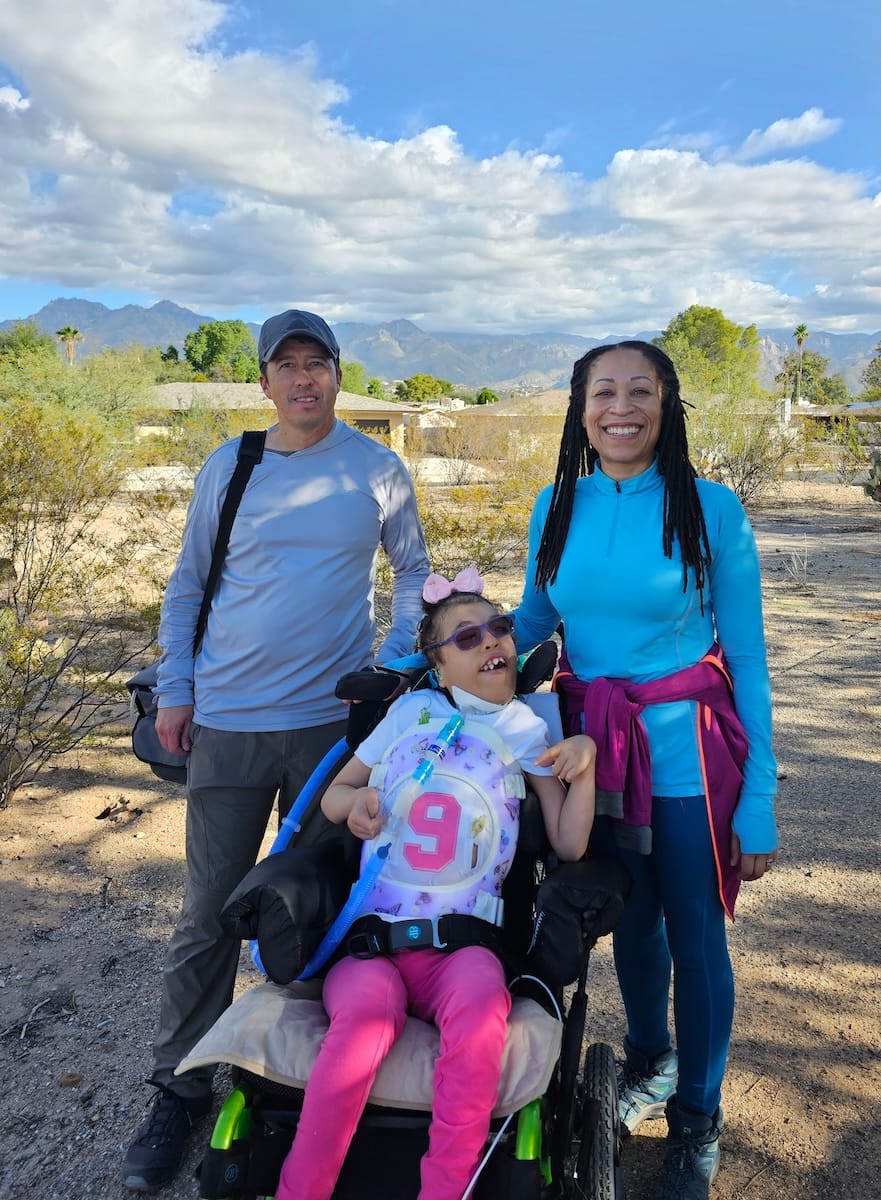
My name is Dianne Westfall. I live in Arizona with my husband, Matt, and daughter Madison, who’s almost ten. After years of criss-crossing the country for my husband’s job with the Army, we’ve settled in Tucson, although it does mean spending a lot of time on video calls to out-of-state family members!
Madison is a happy bubbly little girl who loves school and her teacher. She just started fourth grade and we're so excited to see what’s ahead for her this year. Madison likes music, jokes, roughhousing with her father, snack time, pretend play, and Disney movies. Her favorite by far is Moana, and yes, she has all the accessories you can imagine! She’s a big fan of Coco and Encanto too. We have to watch out when we put a movie on, because she will not go to bed before the movie’s over!
When I was pregnant with Madison, the Army had just moved us to Ft. Huachuca, Arizona, about 70 miles from Tucson. It’s a really remote area, so it took us some time to get established with prenatal care. Once care was established, we scheduled our anatomy scan in Tucson. In what we thought would be a routine appointment to learn our baby’s gender, the sonographer went very quiet. After 20 minutes, I started crying. I knew that she wasn’t allowed to say anything, and something was very wrong.
Finally, after 45 minutes, the doctor came to talk to us and explained what the ultrasound showed: Our baby girl was missing her corpus callosum, a membrane that connects the two hemispheres of the brain allowing them to communicate with each other; her femurs were too short; her cerebellum looked too small; the ventricles in her brain were enlarged; there were issues with her heart…The list seemed endless and I felt so overwhelmed that I asked her to write everything down so I could research later.
I was immediately transferred to a Level 1 trauma hospital that could provide top notch high-risk pregnancy care. Through a screening of the fetal material in my blood, we found out Madison had a high probability of Cri du Chat Syndrome, also known as 5p- after the chromosomal deletion that causes it.
Even through all of this, though, I could feel that Madison was a fighter. I would come home from appointments and eat a banana popsicle and she’d go crazy in there! She was also impatient to come out! She was born in an emergency c-section at 36 weeks after my water broke, and spent four months in the NICU, where her 5p- was confirmed, before coming home with us.
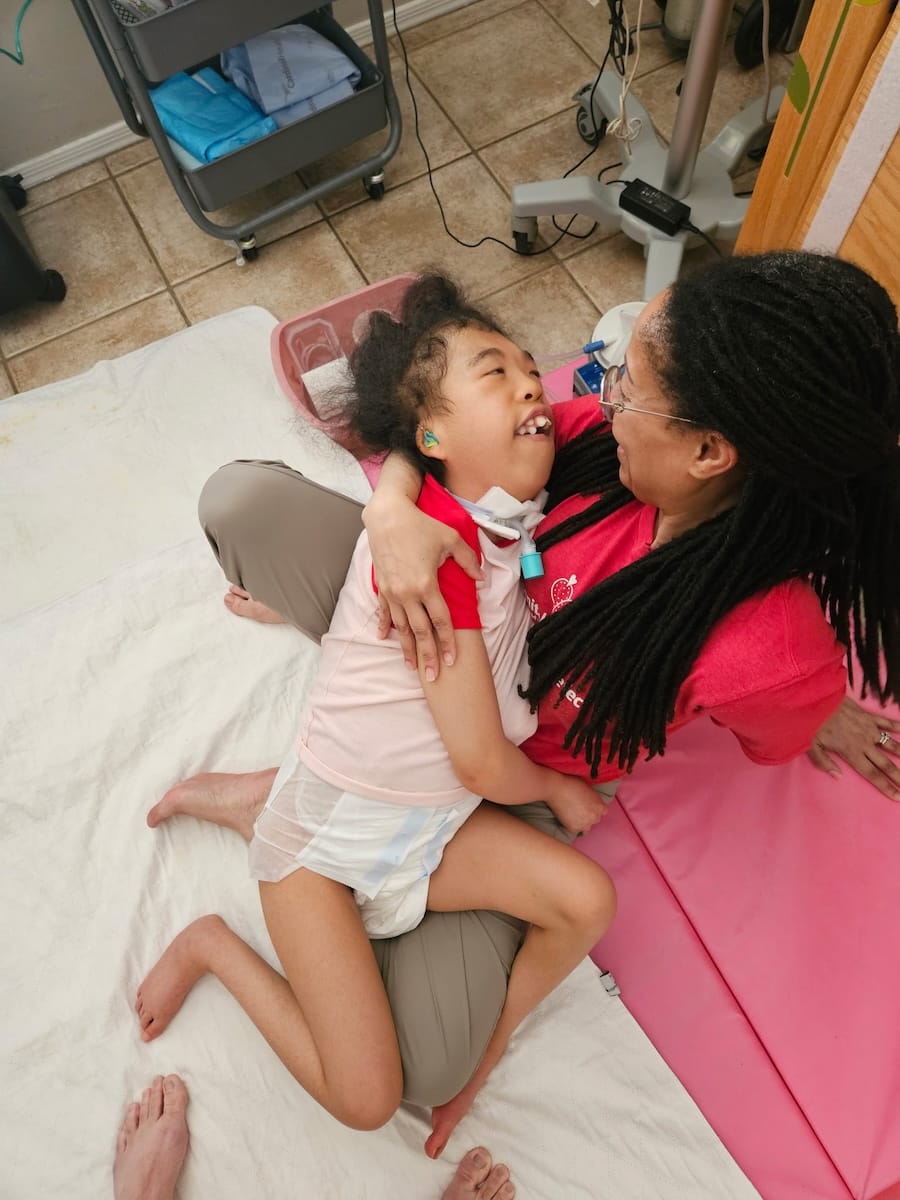
We learned that children with the condition can experience a spectrum of issues, with some being quite severe. During her NICU stay, with many surgeries and procedures, we quickly realized that our Madison falls on the more severe end of the spectrum. Taking Madison home with us was never a question. Figuring out how to do it safely was the hard part. Since the hospital would not discharge us to the remote Ft. Huachuca area, we went through the lengthy process of getting a compassionate reassignment from the Army, which then moved us from Ft. Huachuca to Tucson. In Tucson, Maddie is able to be seen by her wide range of specialists and clinicians. She also has easy access to her preferred children's hospital, which is less than 10 miles from our house.
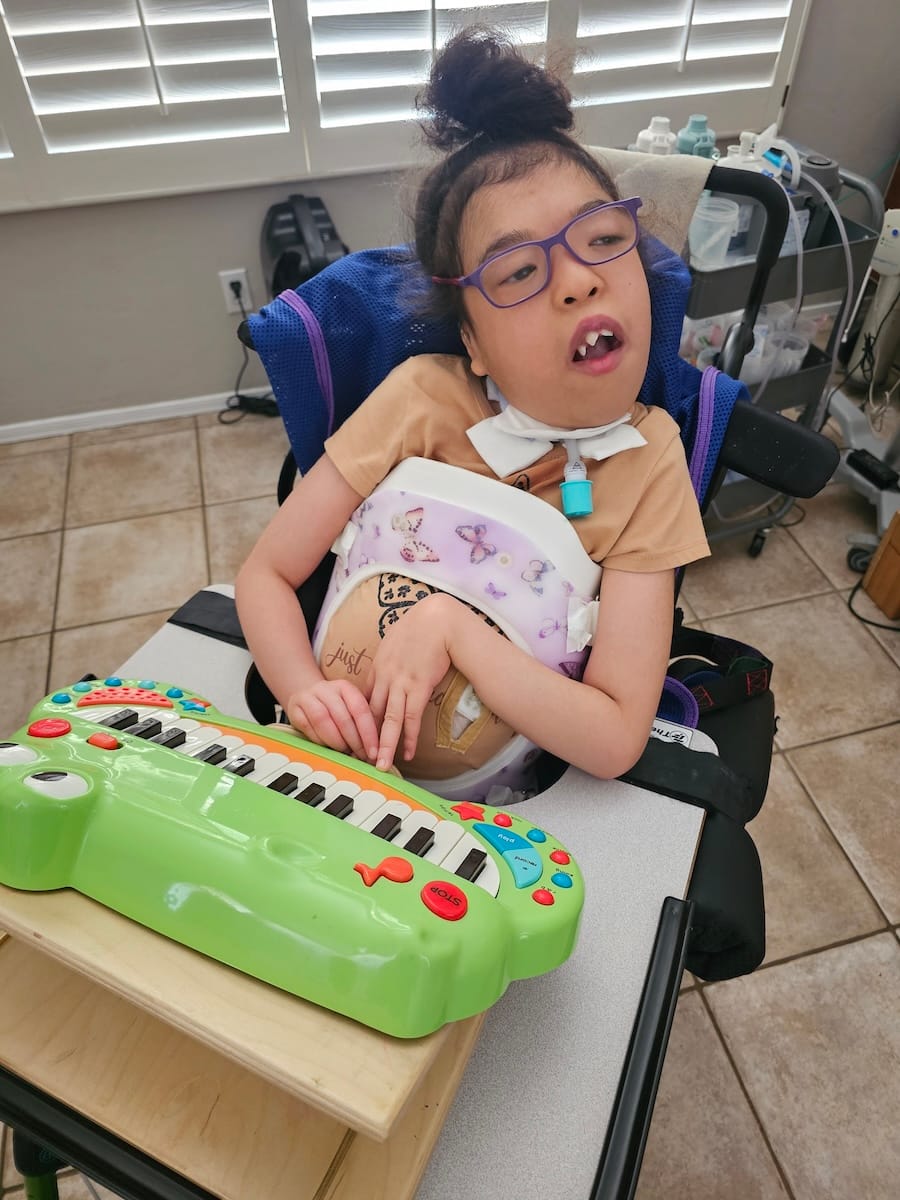
Today, Madison has a tracheostomy to breathe and uses a ventilator, although she's trialing off of it as she gets older and her body grows, making more room for her lungs to expand and get stronger every day. She relies on a g-tube for nutrition and uses a wheelchair for mobility. She also has other health issues, including cerebral palsy, scoliosis that we’re treating with MAGEC growth rods, epilepsy, hearing loss, and congenital heart disease, which required surgery shortly after she was born and again in 2024.
We’re so glad Madison’s here and home with us thanks to support from private insurance and Medicaid.
Although she’s nonspeaking, Madison is learning to use an assistive device that helps her communicate, and she’s very vocal about it! She can be quite bossy, and sometimes she just wants to express dissatisfaction or get a few more cuddles in bed! Other times she’ll use her device to say something like “temperature,” and I’ll check and it will be normal, only to discover she’s just trying to hustle us! Your kid trying to pull a fast one is such a mundane parenting problem to have, and we love it.
Through my husband’s service in the Army, although he is now retired, we have access to private insurance that Madison will be on for life which covers medical supplies and machines, prescriptions, appointments, hospital stays, and adaptive equipment. Medicaid steps up to cover the rest. From the start, the hospital was incredibly helpful. We got connected with a social worker right away, who helped us get set up in Arizona's early intervention program to access the services we needed.
For example, she gets education through the homebound program, where the teacher comes to our house, because she’s too medically fragile to attend in person school. Because she needs skilled nursing to thrive at home, she also gets Medicaid coverage for nursing. We love our nurses, including a former Army nurse and a former NICU nurse, so she’s in really great hands. That care allows me to work and allows us all to be part of our community.
We definitely experience hiccups. For example, Medicaid doesn't provide enough diapers, and we don’t get enough hours of nursing support. Sometimes there are nurse callouts or long gaps in nursing coverage due to the nationwide home health nursing shortage. My husband and I learned pretty quickly to take shifts when we can’t get nursing coverage, rather than both trying to stay awake and feeling like zombies. We also take shifts around hours that aren’t covered by our nurses to ensure Madison gets 24/7 eyes-on care.
Ironically, we now worry that as she grows older and stronger thanks to the services she receives, the algorithm will decide she doesn’t need as much nursing care and our hours might be cut. Especially with the coming Medicaid cuts, we don’t know if the state will have enough money, so we’re keeping our fingers crossed for the long term.
People sometimes ask us what we would do with a “typical child” and I honestly don’t know. Madison is our only child, she’s a typical child to us, because she’s all we know! And we’re so glad she’s here and home with us thanks to support from private insurance and Medicaid. Our Maddie is the light of our lives!

Advocacy, within my capacity, is so important to me. Telling my family’s story helps people understand the importance of an equitable and just care system.

JW is a kind, resilient, caring child who counts on Medicaid for his lifesaving seizure medication.

Little Lobbyists' intern Grace Heuer writes about taking the fight to Capitol Hill...and rethinking what advocacy can look like.

Lazaro lives in his Maryland community thanks to the state's Community Pathways Waiver.