Our Children Deserve More Than Thoughts and Prayers
We stand with the Oregon community in grief, in solidarity, and in the demand for a future where children can learn without fear.

Mississippi Medicaid is what allows Peter, his brother Zachary, and his widowed mother Lisa to live happy, healthy lives.

By Lisa Kent
My name is Lisa Kent. I’m a solo mum living in Canton, Mississippi, with my two neurodivergent sons, Peter, who is seven, and Zachary, who is five. I’m from Seattle originally, and moved to Mississippi in 2016 for my then boyfriend’s job at the local Nissan factory. We married in 2017 and Mississippi is where we made home.
After my husband’s death in 2022, I am staying in Mississippi with my boys because it is the home we created together, the cost of living is lower, and life is slower here. It’s especially important for us because living within an ambulance ride of a children’s hospital is non-negotiable for us, and many cities with high quality of care and services are too expensive to live in.
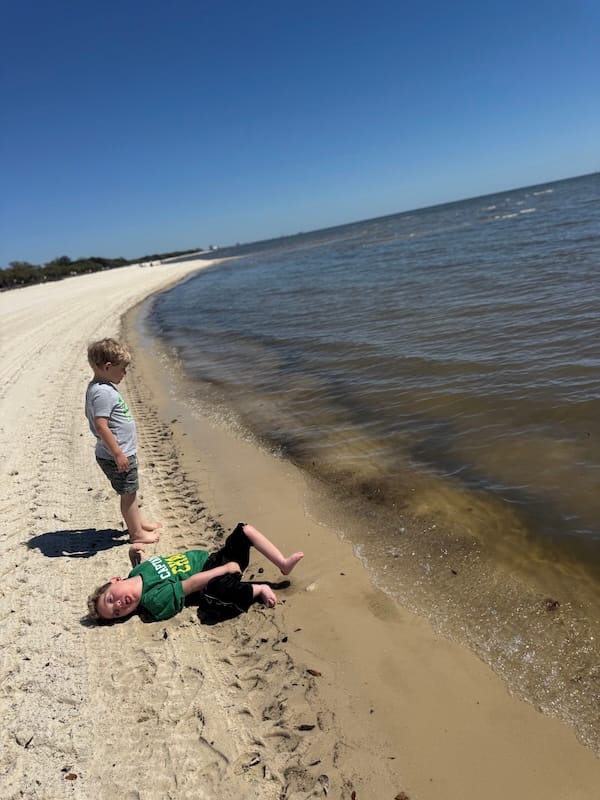
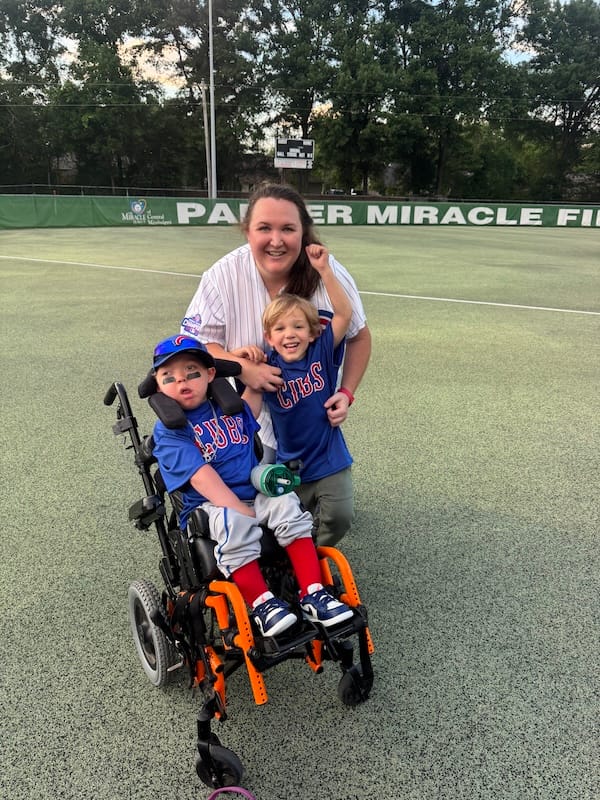
Peter is about to enter second grade at our local public elementary school. Peter loves school so he’s very excited. Peter loves his doggos—Big Dog Colson and Little Dog Frankie. Peter is quite mischievous. He’s a real prankster: He likes to move in unpredictable ways and then laugh at the chaos, and he will pretend to be asleep to trick people into snuggling with him a little longer or get himself out of work. Peter loves Ms. Rachel, Blippi, Bluey, The Masked Singer, Entertainment Tonight, and anything Jim Henson Productions. He also loves musicals and has been known to rock out to recorded concerts like Taylor Swift, Billy Joel, and Elton John.
Zachary will enter kindergarten at the same school and loves all things numbers and Thomas the Tank Engine; he’s a very independent, active kid who’s good at getting his own snacks and finding things to do. Zachary claims his best friends are Peter’s nurses, and his favorite television is Numberblocks, Bluey, and Alphablocks. Ms. Rachel and Blippi could get coparenting credits during some of our darkest hours, forever grateful for their service to kiddos.
My pregnancy with Peter was uneventful, but during the last hour of active labor Peter lost oxygen and sustained a hypoxic-ischemic encephalopathy (HIE) event, which caused a severe brain injury. He was rushed into the NICU, where he ended up staying for 35 days, and he spent his whole first year of life in and out of the hospital. With each visit, we learned more about his condition and needs. We would gain new diagnoses and collect new medical equipment and care routines. Because of his brain injury, he has epilepsy, cerebral palsy, hearing loss, cortical visual impairment, digestive complications, chronic lung disease and a number of other diagnoses, including severe global developmental delays. He’s a wheelchair user, and he also needs medical equipment like a stander, cough assist, suction, a BIPAP to help him breathe, a feeding tube and pump, and a pulse oximeter. His disability is lifelong and he will need 24/7 assistance with daily living for his lifespan.
In 2020, my husband Rob was diagnosed with testicular cancer at the start of COVID. After hearing doctors tell us we had a small window that would be our last chance to conceive a second child I got pregnant with Zachary. So we were managing our medically complex child, a pregnancy, a birth, and my husband’s cancer treatments all during a global pandemic. Mississippi hospitals were beyond capacity. It was really overwhelming!
Zachary was born in 2021 and spent a few days in the hospital dealing with jaundice before heading home. At that point everyone knew us because of all the time we spent there with Peter. Mississippi Children’s is the family we never expected to have, but we love them and are eternally grateful for their service to kiddos and families like ours. While Zachary’s early childhood progressed as expected, he started missing some milestones and his medical team determined that he has autism and ADHD. He’s super social and comfortable with adults, but still struggling to socialize with some kids; he will engage in parallel play, but is working on his social skills and learning about routines and structure. He is extremely smart and excels at math.
Despite his initial positive prognosis and care, my husband died after an 18 month cancer battle at age 37 in 2022. His loss been a huge adjustment for our whole family, and I am still actively grieving. I don’t have family in Mississippi, Rob’s family is from England, so it is just us here in Mississippi—we live in the middle of both our families, far away from everyone. I can’t move back to Seattle because of the cost of living, lack of caregiving infrastructure in Washington State, and WA’s traffic infrastructure that could complicate our frequent emergencies.
After my husband died, Peter started experiencing Paroxysmal Sympathetic Hyperactivity (PSH), which is also known as neurostorming, where the brain just kicks into a stress response—fortunately, we’re able to control that with medication now, but he still has dysautonomic symptoms, seizures, and other medical emergencies. Zachary started daycare after Rob died, and he was constantly bringing home bugs that could make Peter very sick and hospitalize Peter: Peter survived 13 hospitalizations the year after Rob died, most of which required emergency transport to our local hospital.
I am unable to work full-time due to Peter’s level of care, frequent appointments, and frequent infections, but Mississippi has Medicaid services in place for parents of medically complex children that are my support community. We utilize private-duty nursing through the state, which is critical because Peter requires constant eyes-on care and airway clearance. Peter also requires nursing care to provide airway clearance at school, which he attends part-time.
With these services, I am able to work part-time as a substitute educator for SPED Self-Contained Classrooms. I don’t earn much, but it allows me to positively contribute to our local community which means the absolute world to me: Being a full-time caregiver is isolating, this chance to work, contribute, and be myself makes me a better parent, human, and citizen of the world. Peter is healthier with his nursing services: We see reductions in hospitalizations when we have more nursing support. I am also able to take Zachary to his services due to Peter having care: Mississippi Medicaid literally keeps our family alive.
Mississippi also has Prescribed Pediatric Extended Care (PPEC) facilities, which are medical daycares for medically complex kids like Peter. They’re staffed with RNs and therapists who can offer occupational therapy, physical therapy, speech therapy, and other treatments on-site. We don’t utilize these due to Peter’s frequent infections, but, many families depend on these facilities to be able to earn income. Having PPECs as an option for our family, if we choose to use it, adds an additional layer of “safety net” to being in Mississippi on our own.
Without these home services, medically complex children in Mississippi would depend on facilities which would be more expensive to operate than the cost of home services and PPECs. These institutional facilities would also need to be built, because currently there is only one long-term Complex Care Pediatric Live-In facility in our state: Medically complex kiddos unable to obtain beds in care facilities currently and before this facility was forced to live in-patient at our local Children’s Hospital. The children who grew up and lived their full lives inside the acute care Children’s Hospital were the inspiration for this facility to be built. This facility frees up more hospital beds for acute care, and gives those children a more “home-ish” life than in a hospital room surrounded by acute care patients. These facilities are needed for kiddos that need them, but it is not sustainable for ALL medically complex children in Mississippi to utilize facilities like this one. Home and community-based Medicaid services are vital to the health of Mississippi.
Rob worked for Nissan for 15 years. They were a really great employer. He started there in England, where he was from, and worked in Paris before transferring to Mississippi. Nissan provided great employer insurance, and we used a Medicaid waiver for secondary insurance to cover Peter’s medical needs. After Rob’s death, Nissan provided me with surviving spouse health insurance coverage for two years, which was so helpful for getting back on our feet. Zachary receives primary Medicaid because of our low income, while Peter received primary Medicaid due to his level of disability through the Katie Beckett Waiver. Meanwhile, I’m paying $1,000 for insurance through the Marketplace, up from $600 before H.R. 1.
Medicaid sustains medical infrastructure. Medicaid is the heart of Life, Liberty, and Pursuit of happiness.
A large percentage of our monthly income goes towards my medical insurance premium, family medical expenses, and childcare expenses. We are fundraising for an accessible bathroom to give Peter a safe place to bathe, a van for transportation, and other costs beyond Medicaid that allow Peter to live and grow safely, and for caregivers to continue caring for him safely. We will also apply for Adult IDD waivers this year because the waitlist is roughly a decade for adult services here in Mississippi and this wait could increase with further cuts.
We never envisioned a life so dependent on Medicaid, but I am not sure that many people do. We did not ever anticipate disability, cancer, or death of a parent. The Medicaid system allows us to pursue Life, Liberty, and Pursuit of Happiness as a solo widowed mum family with two neurodivergent children. In all aspects of life, it is a struggle to break even, but being in Mississippi allows us to do that. We were proud to move here for the job opportunity provided by Nissan, we are proud to contribute to Mississippi, we are thankful for the life that living in Mississippi gives to us, and we advocate for medical and academic resources so other families can continue to pursue Life, Liberty, and Pursuit of Happiness regardless of neurotype or physical ability.
When I talk about my kids, I see that people in Mississippi are broadly supportive of making sure they get the care they need and they are able to live in the community. Medicaid is what makes that possible, and many people are not aware of how many kids receive Medicaid coverage, and how much our full medical infrastructure depends on Medicaid.
When I hear Mississippians arguing for reducing Medicaid coverage and making it harder to get, I don’t know if they understand the ripple effect of how that would affect kids, small business, and medical infrastructure across the state. Within Mississippi, 49% of kids have Medicaid. Many rely on free and reduced meals at school. These programs are essential for children’s health and wellbeing.
Medicaid funding is keeping rural facilities in operation. Medicaid is keeping rehabilitation providers in service. Pediatric occupational therapy, speech therapy, physical therapy, and behavioral therapy clinics have 80-90% of their patients paying with Medicaid, and without that funding they would not be able to operate. ALL children would lose services regardless of payment method. Rehabilitation is primarily a female industry. Medicaid provides opportunities for nurses, therapy providers, and more to work flexible hours and maintain their skills and credentials active while serving Mississippi’s most vulnerable children. Private duty nursing provides unique opportunity to choose exact shifts around a nurses lifestyle. Medicaid keeps these nurses employed and active. Continued federal and state cuts to Medicaid will devastate our communities, especially our rural hospitals, who are already struggling.
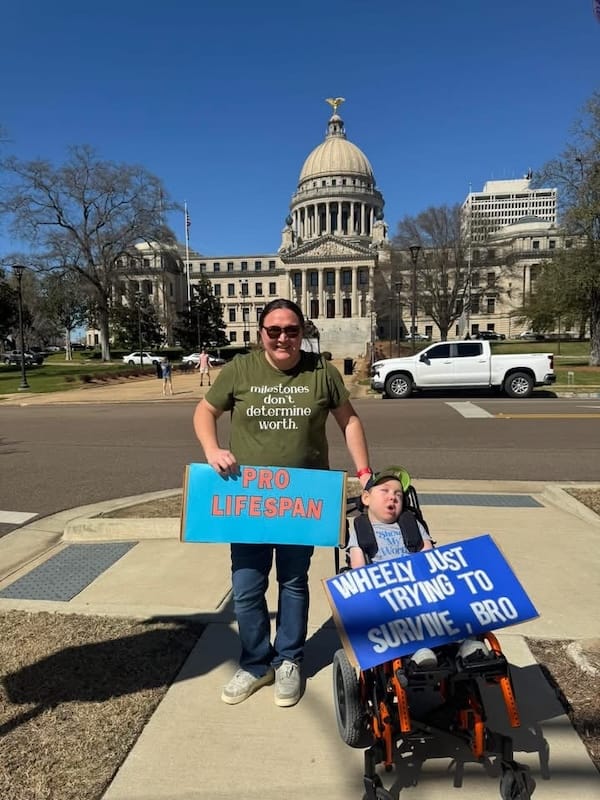
This has really turned me into an advocate, because this care and coverage is so important for making sure children in Mississippi thrive and have access to opportunity. Medicaid is Pro-Life. Medicaid is Pro-Lifespan. Medicaid is Pro Small-Business. Medicaid is Pro-Innovation. Medicaid sustains medical infrastructure. Medicaid is the heart of Life, Liberty, and Pursuit of happiness beyond those who are on Medicaid: It provides it to all who work in industry and to all who receive any medical services in our state.

Public service and advocacy run deep in the LaVigne family.

Violette is an opinionated girl who marches to the beat of her own drum. Thanks to Medicaid, she does that at home, not in an institution.

Advocacy, within my capacity, is so important to me. Telling my family’s story helps people understand the importance of an equitable and just care system.

JW is a kind, resilient, caring child who counts on Medicaid for his lifesaving seizure medication.