
Sarah's Story: Lessons in Life, Litigation, and Lobbying
It might feel scary at first to talk to elected officials. Mother Sarah Anderson has tips as a parent, but also as an attorney and policy advocate.
By Sarah Anderson
Talking with elected officials and media to advocate for your child can be scary at first. But it does not have to be! The most important thing to know is that at Little Lobbyists, we prepare and strategize as a group and you are not alone. Each of us brings our own expertise, character, and presentation style to the table. Together, we create a really powerful team. With all of that shared experience and skill, we can be flexible and are able to respond to whatever is thrown at us.
Preparing to make the best case—your case.
Little Lobbyists does a great job of preparing us before we meet with media or congressional offices, giving us background on the issue, tips on answering questions and being persuasive, and helping us organize our thoughts so we are telling our stories in a cohesive, understandable, and compelling way. We also gather to help each other prepare and practice so, in the moment,we can focus on telling our stories. Remember, you are the expert of your story!
When possible, research the representative’s case too.
I kind of live in this world. I work in policy. So part of my job is following the news and doing research on issues of concern and potential advocacy. I’m also an attorney. I learned the lesson that you do not win just because you have a good case. You have to defeat the other side. So when I am preparing to advocate on an issue, I want to know what the other side is saying. I want to know what arguments a representative is making, or that they might make in a conversation with them or their staffers.
I try to look at their social media, the media outlets that their office might get their news from, and statements from leaders of their party. I want to see both sides. If we go in only knowing our side, we can only get so far. We have to know why the other side loses. If we have time, that would be the ultimate prep. But I know we do not always have time! If you do not have time, go in with your story. Just tell your story. You do not have to argue the issue or be the expert on policy, just take your seat at the table and tell your story. If at the end of the day that’s all you’ve done—just told your story—it’s still a perfect day.
Consider how to build off of an emotional response and how to end a conversation.
One thing I have learned from my experience with Little Lobbyists is that people can surprise you. And unfortunately when doing this work, it can be in a negative way. You think you’ve heard everything or that someone couldn’t possibly say something terrible to you out loud, but it does happen. It is important not to react immediately from a place of emotion because that does not really get us anywhere in our advocacy or in our storytelling.
Take a pause and know that silence speaks louder than an emotional reaction. Then recenter and come back to your story. Once in a while an unkind or clueless comment is coming from ignorance. If it is something you can help teach them, that is a powerful response as well. Bring it back to your story and say, “Well here is an example from my life, or here is what happens in the medically complex community, or this is what it is like for a disabled person… .”
The second time is always easier. We have been asked those hard questions and had a chance to regroup and learn even more. What’s a better response? How can we make the next meeting even more productive? These conversations might not always end the way that we want. We have to be okay with walking away knowing, “This is the end of this conversation, but we are going to be back with the data. We are going to keep telling our story on social media. We are going to be back next week in these halls.” The Little Lobbyists don’t stop!
These battles are not fought and won in the same day.
As a parent, sometimes we feel so close to the issue and it can make us feel desperate. And there is truth there: these are desperate times. There are real consequences on the line. So when we show up to advocate, it can feel dire. But we have to remind ourselves that it's rarely about changing that person’s mind in that encounter. It’s about running the marathon, staying the course, picking it up again tomorrow. Each discussion is a way of holding their feet to the fire. The issue is not won or lost in one conversation.
Our children are our purpose and our power.
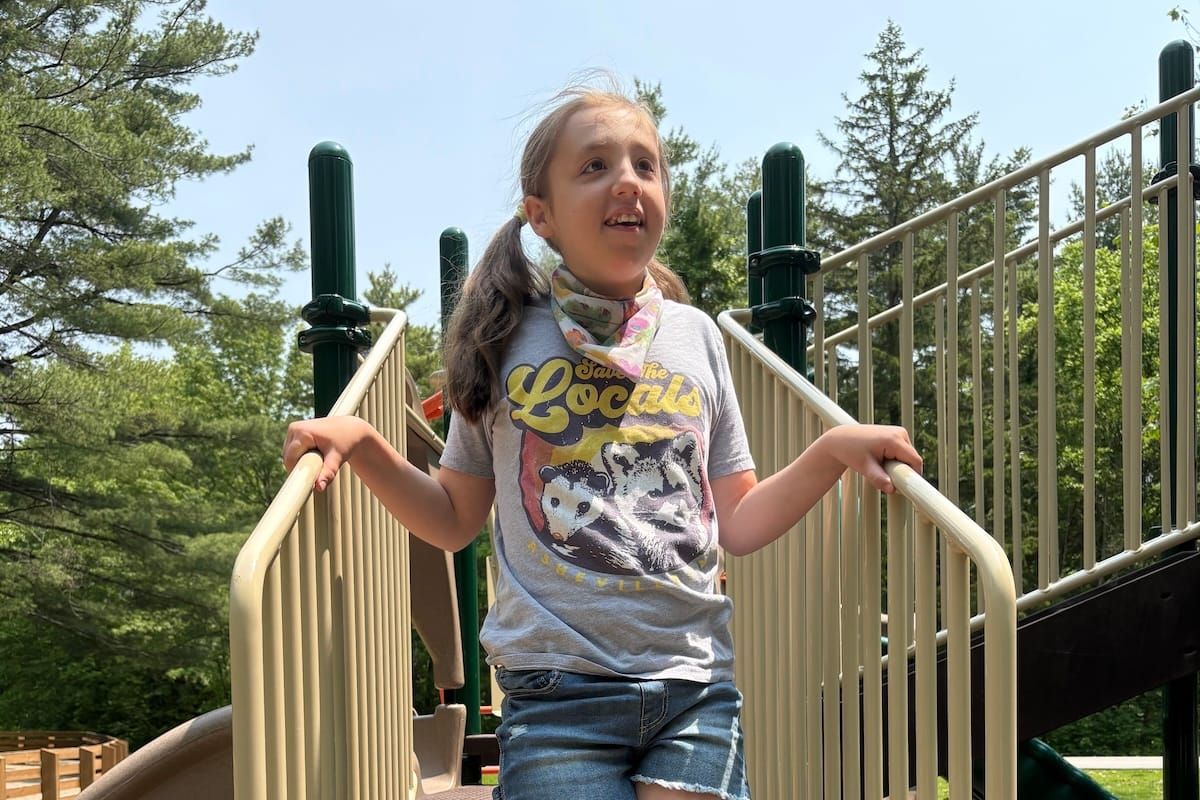
We are here advocating for our children and many times with our children. And I know that my daughter Audrey is a superstar. I may not be but she definitely is. So when I feel self-doubt or imposter syndrome, I remind myself that the senator or representative and their staff are lucky to be meeting Audrey. Being there with your child gives you courage that you might not otherwise have. When I’m with Audrey or advocating on her behalf, I am relentless, brave, and courageous in ways I wouldn’t be if I was arguing just for myself.
Our kids are superstars and they take center stage. Once I met with a couple of people and witnessed the power our kids have, I saw the whole situation in a different light. These people are OUR representatives and they’re here to serve us, and here to serve our children. So when our children show up and want to be seen and heard, that congressman or representative should listen. It is literally their job.
Whatever room we are in, it is important to read the energy of that room. Trusting our intuition is really important when we’re sitting at these tables. If the person you are speaking with seems interested in one part of your story, use that piece to lead them to the point that you want to make. Also, each of our stories are complex and layered. It’s not right or wrong to tear up or be emotional; you just need to meet the moment.
Power up your mind and body to be big.
Preparation is more than just practicing your story and knowing the facts. Body movement affects your brain, so get big and get loud. Before heading into a conversation, go into the bathroom, your hotel room, wherever, and really stretch and make your body big. Spend a couple minutes being really huge and taking up space. If you are alone and you can make noise, make loud noises with your voice, exercise your lungs, get that air all the way down in your diaphragm. After doing this, you will enter the room differently, more confidently. You are going to pull your shoulders back, hold your head up, take up space. That’s the goal: take up space, and be noticed!
This can be a challenge because for me—and probably for a lot of parents of kids with medical complexities or equipment or behaviors—there is pressure to be small in public. Most of the time we’re trying to be little as we can and to not take up so much space. Or trying to navigate each situation to make it as easy as possible on the people around us. Or the most crushing of all, trying to be invisible. This is not that time. This is the time to be BIG—to take over the hallway, to fill the office, to take your seat at the table. This is all about your story, all about your child, all about what you are carrying. And you carry a lot. You are strong. Show up as with that strength, stand up tall, and make your voice be heard.
The two most important things to remember.
Number one: your power lies in your story.
Number two: you are not alone. Out in the world, you may feel powerless with your one lone voice. It is true that one person might not be heard. But when you march through the streets of D.C. with the Little Lobbyists and 20 wheelchairs block traffic for two light cycles at a time, that in itself is a very powerful story, and you know you are not alone.