
Ryan's Story: Making Home for Medically Complex Foster Children
Welcoming medically complex foster children into my home wouldn't be possible without Medicaid.
By Ryan Jolly
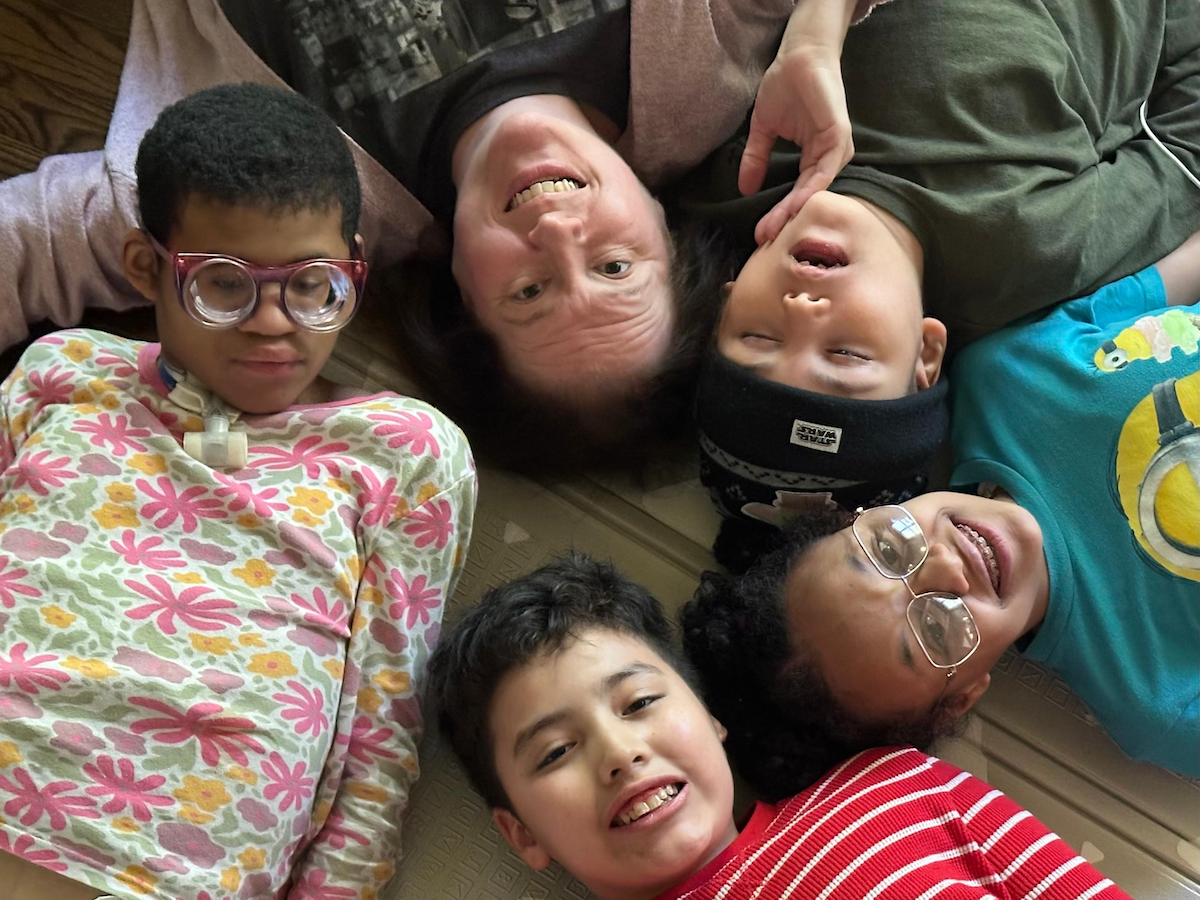
My name is Ryan Jolly. I’m a single foster and adoptive parent to four children, all of whom have brain injuries. We live in Kansas, where I run a full-service psychiatric clinic focused on fetal alcohol spectrum disorder (FASD), offering much-needed support to children and families at the Brain First Family Center. As a nurse practitioner, I am the only provider in my area that takes Medicaid and doesn’t have families on a six-month waiting list; it’s extremely important to me that people have access to these services. Without Medicaid, the families I serve would be left out in the cold.
I know how important Medicaid is to families because of my own medically complex children. Medicaid is what makes it possible for families like mine to open their doors to foster children. Without the support of Medicaid while in foster care, and ongoing Medicaid benefits for adopted children, it would be difficult for families to open their homes to foster children and nearly impossible for most medically complex children to find placements. Children with high medical needs would be living in hospitals, isolated from their communities and deprived of the love and care that come with a guardian and family. Access to Medicaid benefits ensures that their coverage remains consistent for foster children regardless of which family is caring for them.
Two of my children, Max and Diana, have fetal alcohol spectrum disorders (FASD). They were exposed to alcohol during their gestation which left them with brain injuries. In addition they experienced significant trauma in their early developmental years and require a lot of additional support to address that. Their Medicaid insurance helps cover the therapy and mental health care that are essential for their wellbeing, as are the medications that help them survive and thrive.
Max is 13. He came to me at age three after going through five previous foster families. Max loves Minecraft and is also incredibly playful and imaginative, he’s always working on a story that often involves dragons. In addition to his FASD, Max has autism and ADHD and receives support in school; he can absolutely do the work at his grade level, but he has trouble with follow-through. I’m always pushing the school to think about the totality of his experience, not just test results that really don’t capture his capabilities and who he is. Aides, provided for by his Medicaid benefits, come into our home four to five days a week to work with him on his behavioral issues and help him learn to manage his impulsivity and aggression.
His sister Diana is 14. She came to our home as a four-year-old after seven prior placements. Despite the difficulties of her early life, Diana is kind and the best big sister, though she’s also got a sarcastic streak and sometimes she can be a little too blunt. She loves fashion and very much has a riot girl vibe going on. She’s also a natural leader with incredible confidence, and her plans for her future are always changing — right now she wants to be a dance major — but she’s really committed to going to college.
I had to fight for in-school supports for Diana. She really struggled academically until we were able to get a paraprofessional to work with her one-on-one and help her with things like time management, staying on task, and completing her assignments. With someone in her corner, Diana has been excelling in school and she’s even in a reading contest with her aide to see who can read the most books this year.
Miya, who is 13, came to me when she was just two years old. She spent nine of the first 12 months of her life in the NICU, and was hospitalized another 16 times before coming to our home. She was not expected to survive and needs hospital-level care; at home, that means 1:1 nursing at all times to meet her needs. She’s nonverbal and cognitively operates at about the level of a four-year-old, but she’s a gifted communicator and has consistently proved people wrong about her development and survival. She loves hugging, snuggling, having books read to her, and anything Minnie Mouse; her nickname when she first came to us was “Lovey” for a reason! She also loves music and frequently shimmies for the camera — our whole family loves dancing. Myia lives such a rich and full life, no matter what people think about her prognosis: Her life has value and meaning, and she’s so important to our family as an active member with lots of love to give.
My youngest is “Bob,” an eight-year-old foster child who incurred catastrophic injuries at 16 months of age and was not expected to survive. When I got the call to take Bob, I was in the middle of the adoption process for Diana, Miya and Max. I thought my family was complete, so I’d given away the crib and all the baby/toddler stuff to other foster families that could use them. When the call came, I was told that he was stable enough that he didn’t need to remain hospitalized, but wouldn’t live very long and should have a chance to come home for Christmas.I told the social worker sorry, but I don’t think we’re the right fit. But when I got the followup call that they couldn’t find anyone, and then another, and another, and the idea of him alone in a hospital for his last Christmas broke my heart. So, I said yes we would be his medical foster home for as long as he needed one. We thought that would be a matter of weeks, it's been almost 7 years.
Bob is quadriplegic and dependent in all care; he can’t sit up or wave a fly away from his face. He’s what some people call “locked in” but that’s such a narrow view of who he is and the life he leads. Bob communicates, even if it’s just by scrunching his nose or turning his head to the side. In all the ways he isn’t like other children, in many ways he’s just a regular little boy who lights up when his older siblings, especially Diana, play with him and he thinks farts are funny. The home-based services that are available to him through his Medicaid insurance are the only way we’ve been able to be his home for nearly 7 years. Just one of his medications costs $15,000 — as a generic. He’s constantly experiencing hospitalizations and doctors’ appointments, needs nine different pieces of plug-in equipment to stay alive, and relies on an implanted medical device to address his seizure disorders. Being able to offer this level of care is essential for his health and safety at home.
Everybody has an image in their mind of what Medicaid looks like, what the families and people on the program look like. It’s important to me to tell our story so people understand the true faces of Medicaid and learn intimately about the people whose lives will be ripped apart by Medicaid cuts. Any system can be improved, but gutting Medicaid is like burning your house down because you spotted some termites, with your whole family inside.
Due to the volatile nature of my kiddos' complex medical needs, the potential for death looms large in our household. It's very much the nature of things that we all die. But dying because someone took your health care away is not natural, and neither is living a costly life in isolation in a hospital bed because no one was able to open their door to you. Cuts to Medicaid will be devastating to my children’s health and wellbeing. It would also force me to close my practice and leave the workforce to provide the hands-on medical care my children require. Me in the role of fulltime caregiver would be the only option to keep my kids at home. And, even then it would be unsustainable as a long term solution.
Our day to day life as a foster and adoptive family with medically complex members may look very different than yours. Our home, with all of the medical equipment, supplies, and frequent ambulance calls, may be different than yours. Despite that we are a family that is bound together by love and commitment to each other. And in that way we are just like you.