
Bo's Story: An Avid Reader Relying on Medicaid to Keep the Pages Turning
Bo's had his nose in a book since early childhood. He depends on Medicaid to manage his rare disease.
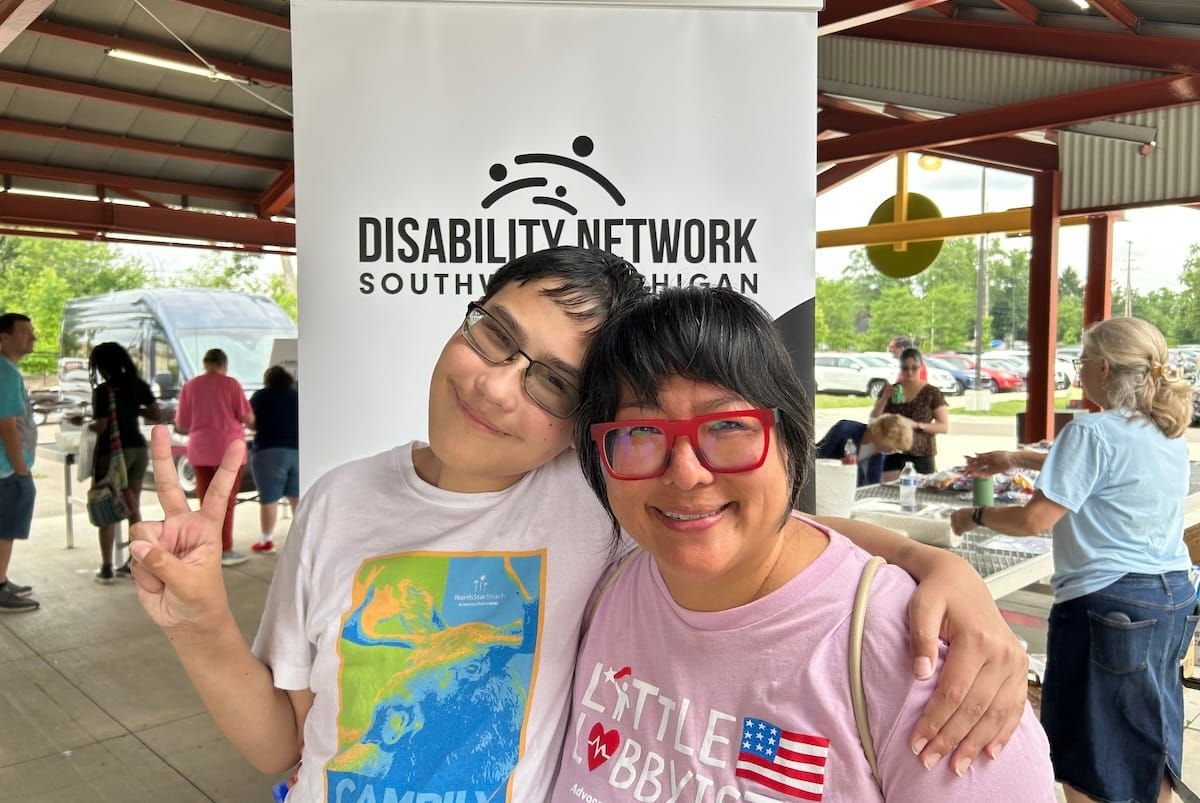
By Kinn Chan de Velarde
My name is Kinn Chan de Velarde. I live in Kalamazoo, Michigan with my husband and two children. Bo is 18 and just graduated from high school. He loves reading. He’s had his nose in a book since he was a few months old and flipping through his bath book. There’s no way to drive past a bookstore without stopping. Bo is a natural at absorbing information and right now he’s into technical books and other nonfiction. Unsurprisingly, he does very well in his language classes, but he also had a great time in his career and technical education class, the modern version of shop class, learning to solder and doing other hands-on things. He’s also a big Star Wars and lego fan, and a very caring guy.
Bo is always just authentically himself and such a gift to live with. It’s important to him to support his community in addition to pursing his interests. Bo is especially interested in politics. We started talking about current events during his rides to school when he was in middle school, and we never stopped. His first job was an internship over this summer with the Disability Network of Southwest Michigan, where he did a lot of research. He also worked with them on creating sensory spaces for people who feel overstimulated. I didn’t know about sensory spaces before and now it feels like I see them everywhere, including at the airport on a recent trip we took to Washington, DC, with Little Lobbyists.
From the very start, I had a lot of discomfort during pregnancy. I had to wear compression stockings! We thought it was because I was an older mom. When he was born, he started losing weight instead of gaining and he was having problems with his gastrointestinal tract. The hospital didn’t really know what to do with us, and we ended up having to transfer to an academic medical facility, where we found out that he has microvillus inclusion disease, which is incredibly rare. I found around 200 case studies when I started searching medical literature. They only discovered the gene that causes it after Bo was born!
Microvilli line your intestines and help you absorb fluid, nutrients, fats, proteins, and carbs. Without them, you can’t live. His intestines just don’t work. We had to put him on total parenteral nutrition (TPN) almost immediately, and he is 100% dependent on that. Being on TPN for life carries a lot of risks for him. There are only seven sites where you can set up the hardware he needs, and there’s a constant risk of infection or other complications; he actually got a severe infection that resulted in a need for open heart surgery. TPN can also be really hard on your body, especially your liver. Kids can need TPN for a lot of reasons, and eight in ten who start TPN in infancy or childhood die of liver failure, which Bo almost did. He went into liver failure almost as soon as he started and we fortunately got on a clinical trial to use a formulation with a lipid made from fish oil, instead of the soybeans that traditional TPN uses.
While Bo can look like any kid when he’s at school or around town, we know that he can get really sick at any time. I’m constantly worried about these serious knock-on effects that could strike at any time, or turn a routine medical procedure into a long hospital stay. This affects our whole family. It can be hard to concentrate at work when your kid is in the hospital, or to worry about whether your brother will survive.
As you can imagine, having a kid with a rare disease is really expensive. When he was born, the cost of his care was a huge concern for us. I assumed we were not eligible for Medicaid because of our income, and I didn’t know about the waivers that allow medically complex children to receive Medicaid. It took going to a conference for families of children with rare diseases to learn that he might be eligible, and he could even get backdated coverage, but even then it felt like you had to know someone who knows someone to get through the application process. Medicaid allows him to get all the therapies he needs, physical and occupational therapy, speech therapy, all these things mean that he had a good start in life.
I worry that Michigan wouldn’t be able to afford losing 60% of its Medicaid funding. The thing people don’t understand is that these cuts will affect everyone, whether they’re in good health or bad health, old or young. Doctors leave practices or stop accepting Medicaid and hospitals close, especially in rural Michigan. What if you have a medical emergency and it’s two hours to the closest hospital? What if you have to wait six months or more for a medical appointment? Health care would simply be unavailable at any price. Wealthy people might be able to have personal concierge doctors, but they can’t afford private operating rooms!
I don’t know how long we can cover his needs if they start to reduce benefits. I hear people talking about waste, fraud, and abuse, and the problem here is fraudulent providers, not families like mine. And Medicaid fraud should go through the judicial system, not legislation. The government can prosecute these providers and recover the money when they win.
It's already so hard to apply for Medicaid. I don’t understand why we’d want to make it even harder for people. Somehow in our society we’d rather make people’s lives more difficult because of this misguided, puritanical idea that you have to earn your rights to be a person. If you’re not a productive person contributing to society, you’re not a person. That’s just wrong.